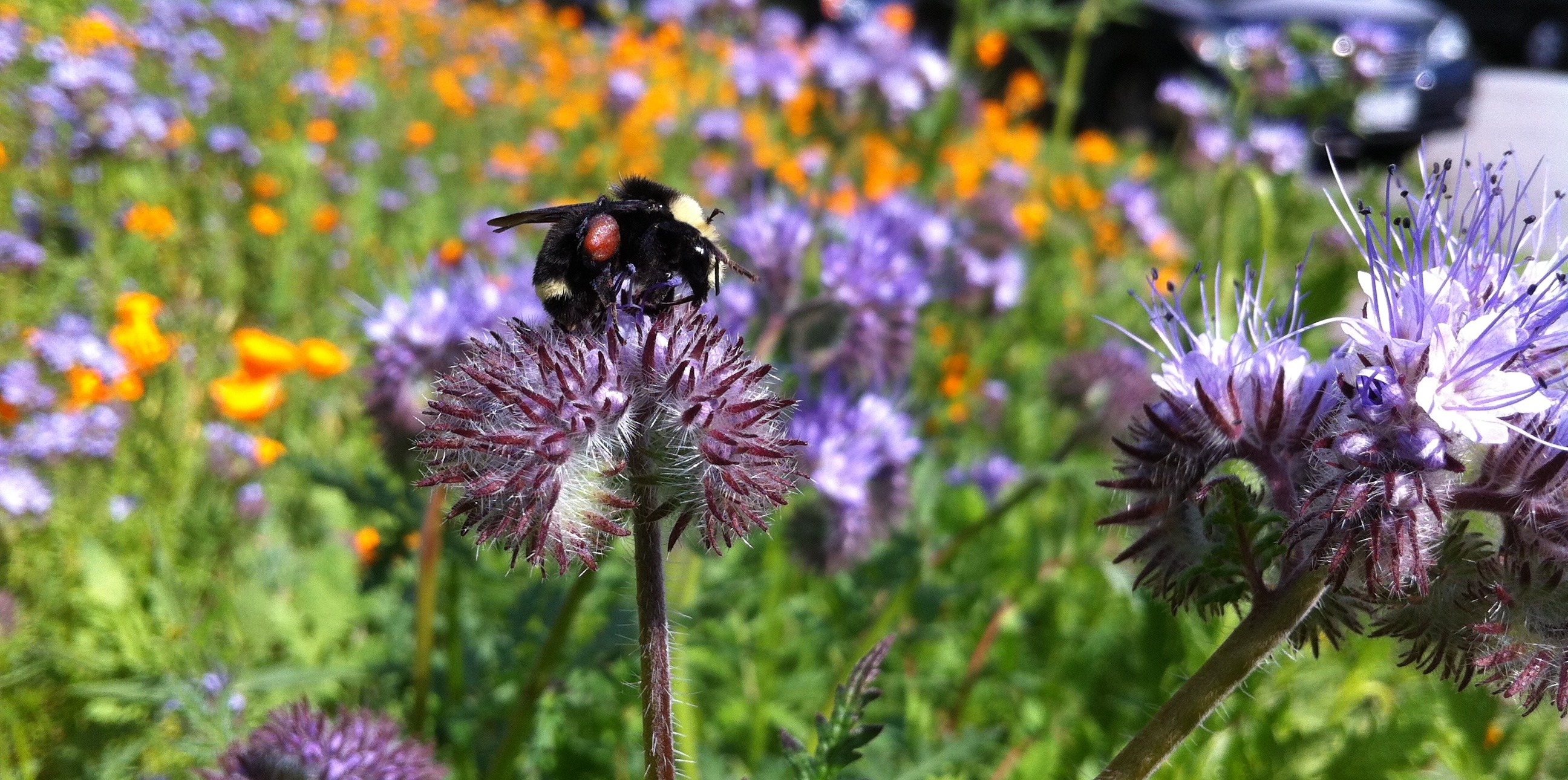
Pollinators are vertebrates (birds, bats, some species of rodents, primates, reptiles and marsupials) and invertebrates (beetles, wasps, moths, butterflies, bees, ants, flies and more) that distribute pollen from one flower to another as they forage, and a a result allow for the fertilization of the plants. They are a key component of global biodiversity because they play a vital role in maintaining both wild ecosystems and plants that produce food (fruits, nuts and seeds) that wildlife and humans rely on to survive. At least two-thirds of the world’s crops depend on pollination by insects or animals. Read more about the importance of pollinators here.
World-wide, pollinator populations are declining with parallel declines in the plants that rely on them for pollination. Both wild and domesticated pollinators are suffering from a range of threats including diseases, pesticide exposure, malnutrition, habitat loss and climate change. In the US, beekeepers have lost 30% of their colonies each year since 2006.
Get involved with pollinator citizen science
This year we are inviting families, clubs and schools to learn about and get involved with pollinator citizen science through surveys and stewardship action. Citizen science is a great hands-on learning tool to get children and youth involved in real science and helps them learn new things about the world around them. The stewardship component engages youth in stemming the decline of pollinators by planting with plants that produce food for pollinators – pollen and nectar.
Through our pollinator citizen science project, youth will learn about wild pollinators, species identification and data collection methods, they will collect data on the abundance and diversity of bees, wasps, and butterflies in green spaces in their local area through data collection events and be encouraged to get involved in stewardship activities that increase pollinator habitat. Data is analyzed by our project biologist and final reports are presented to our partners, who can use the findings to make informed choices about habitat management and how to support pollinator diversity.
Creating Pollinator Habitat
Visit our Planting for Pollinators page to learn more about how you can attract pollinators to your garden or patio.
Download resources to get started
To make it easy for you to get involved with this project and to run your own surveys, we have created a some tools and resources:
1) Pollinator ID card
2) Instruction sheet
3) Instruction sheet (schools)
4) Survey form
5) Pollinator themed activities and games
6) Summer 2018 NatureWILD Magazine featuring articles on pollinators
NatureKids BC will be running Pollinator Explorer Days through our family clubs across BC (check upcoming events), but you are also welcome to create your own event with your friends, family or class.
We welcome questions and suggestions for improving this program. Please contact us at coordinator@naturekidsbc.ca. We’d also love to hear about your experience with this pollinator citizen science program on social media – please tag us! Click here to follow us on Facebook or Twitter.
We are very grateful to our supporters: